The Investment Office reported meetings with South Korean business leaders on 4 November 2026 across technology and industrial sectors. Such discussions can create introductions, but a joint venture needs its own binding commercial architecture. Before signing, the partners should agree what each contributes, how the Turkish business operates and what happens if their strategies diverge.
Describe each contribution precisely
Separate cash, equipment, land rights, customer access and technology. State when each is delivered and how non-cash contributions are valued and documented under the chosen company structure. A promise to introduce customers is different from a committed purchase order. If a partner contributes a facility, verify ownership, liabilities and suitability rather than relying on the relationship’s strategic importance.
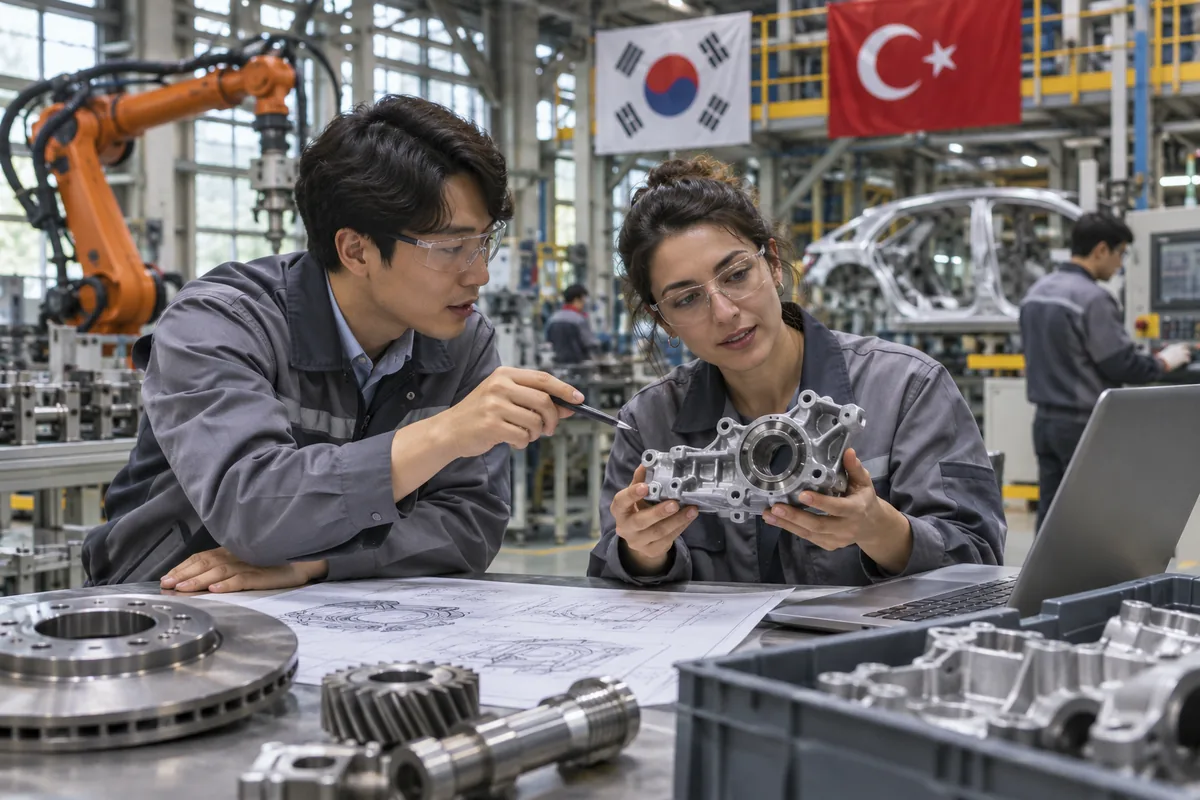
Protect technology without disabling operations
Define background intellectual property, licensed know-how and ownership of improvements. Specify the territory, permitted products, sublicensing and support obligations. The Turkish venture should understand what it can continue using after termination or a partner’s exit. Address confidentiality and employee access, but avoid a structure in which ordinary maintenance depends entirely on discretionary assistance from one shareholder.

Make governance work in practice
Allocate board representation, signing authority, budgets and reporting. Reserve consent rights for material decisions and provide escalation for deadlock. Check how the shareholders’ agreement interacts with the articles and mandatory company rules. A balanced voting formula is insufficient if banking access, procurement or hiring cannot function. Agree the working language and a reliable process for bilingual documents and notices.

Review related-party supply and funding
Many industrial ventures depend on a shareholder for components, distribution or credit. Put those arrangements in written contracts with pricing methods, quality standards and continuity protections. Test whether the venture remains viable if the partner changes its product strategy. Agree the process for additional funding and distinguish shareholder debt from equity. Tax and transfer-pricing review should use the actual contractual flows.

Design an executable exit
Review transfer restrictions, pre-emption, valuation and dispute resolution before the venture begins. A buyout formula should work when the parties disagree, not only during cooperation. Consider how technology licences, customer contracts and employee retention will be affected. Obtain transaction-specific analysis of approvals and enforceability instead of assuming a foreign template can be implemented unchanged in a Turkish company.

Investor checklist
- Valued and documented partner contributions.
- Technology rights during operation and after exit.
- Practical authority, budgets and deadlock procedures.
- Related-party supply and funding contracts.
- Tested transfer, valuation and dispute provisions.
For transaction-specific support, see our investment legal advice and commercial contract services.
Continue with: Battery Manufacturing Investment in Turkey: Incentives, Permits and Supply Agreements; Semiconductor Investment in Turkey: Technology Transfers and Incentive Commitments.
Frequently asked questions
Do government-level meetings guarantee a specific investment?
No. The parties need their own approvals and executed agreements.
Must every asset be contributed as equity?
No. Sale, lease or licence structures may be considered, subject to legal and tax review.
Can a foreign shareholders’ agreement be used unchanged?
It should be adapted to the Turkish company structure and applicable mandatory rules.